
Solar energy stands out as a clean, abundant source that powers our world without harming the environment. Among its forms, solar thermal technology captures the sun’s heat to generate energy, heat water, or even produce electricity. This approach differs from solar panels that convert light directly into power. Today, experts focus on boosting solar thermal efficiency to make it more practical and cost-effective. Innovations in materials, designs, and integrations drive these improvements, helping homes, businesses, and industries cut energy costs while reducing carbon footprints. As we explore these advancements, you’ll see how they tackle old challenges like heat loss and intermittency, paving the way for a greener future.
Understanding Solar Thermal Systems
Solar thermal systems use the sun’s rays to heat fluids or materials, which then transfer that energy for use. These systems come in various types, each suited to specific needs. For instance, flat-plate collectors absorb sunlight to warm water for homes. They consist of a dark absorber plate inside a glazed box, where heat moves to pipes carrying water or antifreeze. Efficiency here often reaches 60-70%, depending on design and location.
Engineers improve these by adding selective coatings that trap more heat while emitting less. Such coatings reflect infrared rays back into the system, cutting losses. In colder climates, evacuated tube collectors shine. These tubes hold a vacuum that insulates against heat escape, achieving 70-80% efficiency even in low light. A key advancement involves integrating phase-change materials (PCMs) that store heat during the day and release it slowly, ensuring steady supply.
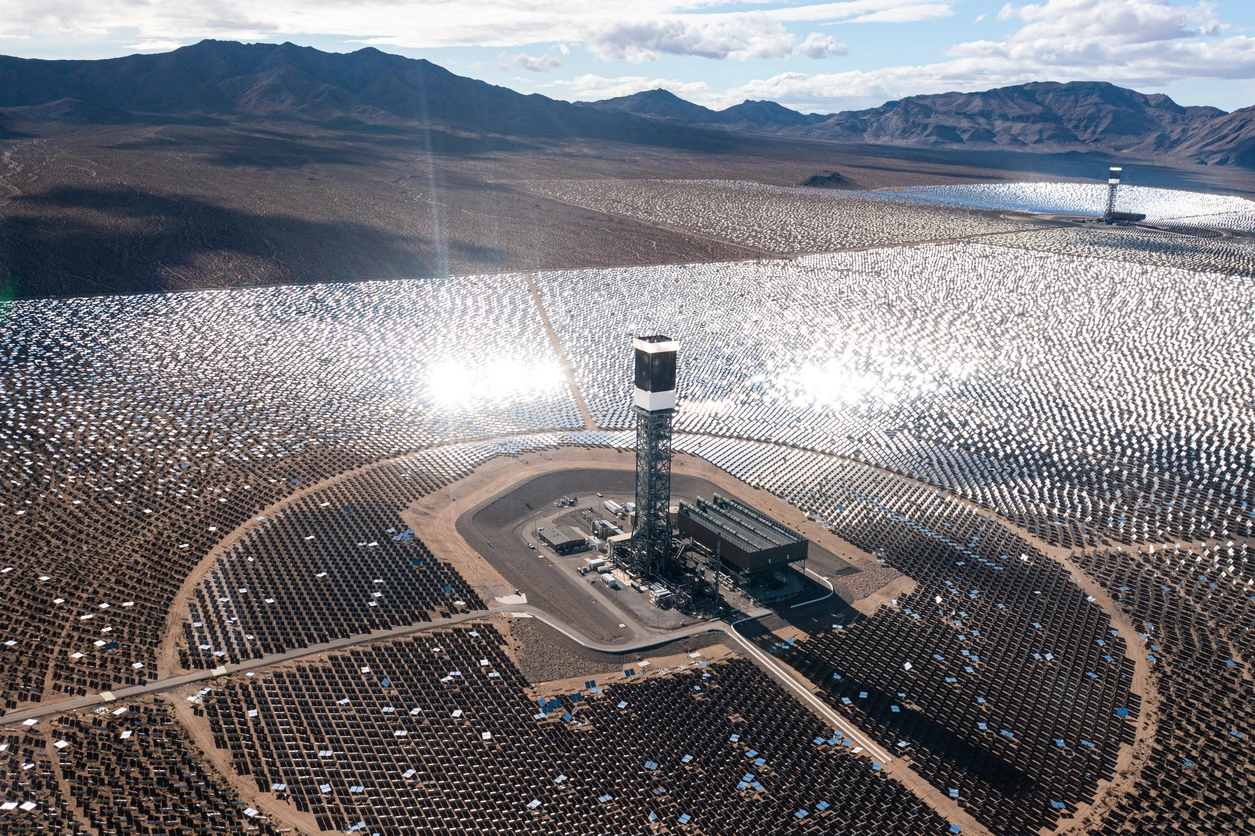
Concentrated solar power (CSP) takes efficiency further for large-scale electricity. CSP plants use mirrors to focus sunlight onto a receiver, heating a fluid to drive turbines. Parabolic trough systems, the most common, curve mirrors to concentrate rays on a tube filled with oil or molten salt. These reach thermal efficiencies of 30-40%. Solar towers employ hundreds of mirrors, called heliostats, directing light to a central tower. Here, efficiencies climb to 40-45% because of higher temperatures.
Dish systems, with their bowl-shaped mirrors, focus on a single point for even better performance, up to 50%. Recent tweaks include better mirror alignments using AI, which optimizes focus and reduces energy waste. For example, companies like Heliogen use computer vision to adjust heliostats in real time, boosting overall system output.
Key Advancements in Materials
Materials play a starring role in raising solar thermal efficiency. Traditional absorbers like copper work well but cost a lot. New nanomaterials, such as carbon nanotubes, enhance heat absorption. These tiny structures trap light across a broader spectrum, converting more solar energy into usable heat.
Selective solar absorbers now use layered designs with metals and dielectrics. They absorb visible light while reflecting infrared, minimizing re-radiation. Research shows these can achieve absorptance over 95% with emittance under 10%, a big leap from older black paints.
Working fluids also evolve. Water suits low-temperature uses, but high-heat applications need oils or molten salts. Molten salts, mixtures of sodium and potassium nitrates, store heat at 565°C without degrading. This allows CSP plants to generate power after sunset, extending operational hours. Nanofluids, fluids with suspended nanoparticles, improve heat transfer by 20-30%. For instance, adding alumina nanoparticles to water boosts conductivity, letting systems run hotter and more efficiently.
In hybrid setups, materials bridge PV and thermal. PV-thermal (PVT) collectors combine electricity generation with heat capture. A PV layer sits atop a thermal absorber, where waste heat from cells warms fluid. This cools the PV, raising its efficiency by 10-15%, while providing hot water. Perovskite materials in PVT show promise, offering cheap, flexible options with efficiencies nearing 25%.
Innovations in Thermal Storage
Storage tackles solar’s biggest hurdle: no sun at night. Advanced thermal storage turns intermittent energy into reliable power. Sensible storage uses materials like rocks or concrete that heat up and cool down. But latent storage with PCMs excels. These materials melt and solidify at set temperatures, storing more energy in less space.
For CSP, molten salt tanks dominate. They hold heat for 15-18 hours, enabling round-the-clock electricity. A plant in Chile uses this to supply 110 MW continuously. New PCMs based on organic compounds or salts offer higher densities, cutting storage costs by 30%.
Thermocline systems layer hot and cold fluids in one tank, saving on materials. They maintain a temperature gradient, drawing hot fluid for power generation. Efficiency here hits 90% for heat retention. Researchers integrate supercritical CO2 cycles, which operate at higher pressures for better turbine efficiency, potentially raising overall plant output by 10%.
In smaller scales, solar water heaters pair with insulated tanks. Smart controls predict usage and store excess heat, ensuring hot water without backup fuels. These advancements make solar thermal efficiency more appealing for off-grid homes.
Hybrid Systems for Enhanced Performance
Blending solar thermal with other renewables amps up efficiency. PV-thermal hybrids, as noted, dual-produce electricity and heat. In buildings, they integrate into roofs or facades, cutting energy bills by 40%. A study on PVT systems shows they outperform separate PV and thermal by 20% in energy yield per area.
Solar-wind hybrids pair thermal storage with wind turbines. Wind fills gaps when sun dips, while thermal buffers calm periods. Off-grid sites in remote areas benefit, achieving 80% renewable penetration. Solar-diesel hybrids replace fuel with thermal heat, slashing emissions by 60%.
Advanced hybrids include solar-assisted heat pumps. Solar collectors preheat water, easing the pump’s load and boosting coefficient of performance (COP) to 4-5. This means more heat output per electricity input. In desalination, solar thermal drives multi-effect processes, producing fresh water efficiently. A setup with parabolic troughs can yield 10,000 liters daily with 40% thermal efficiency.
AI optimizes these hybrids. Algorithms forecast weather, adjust flows, and detect faults early. This raises system efficiency by 5-10%, making operations smoother.
Case Studies and Real-World Examples
Real projects showcase these technologies. The Ivanpah Solar Power Facility in California uses solar towers with 392 MW capacity. Its heliostats focus on boilers, generating steam for turbines. Efficiency stands at 28%, but with storage additions, it could rise.
In Spain, the Gemasolar plant employs molten salt storage for 15 hours of operation. This CSP tower achieves 40% annual capacity factor, far above typical solar. Upgrades with better receivers push solar thermal efficiency toward 50%.
For homes, China’s widespread use of evacuated tube collectors heats water for millions. These systems hit 75% efficiency in sunny regions, saving coal equivalent to 10 million tons yearly.
A hybrid example: Dubai’s Mohammed bin Rashid Al Maktoum Solar Park mixes PV and CSP. The CSP portion uses parabolic troughs with storage, delivering 700 MW at night. Efficiency gains from hybrids cut LCOE to under $0.03/kWh.
In research, labs test nanofluid-enhanced collectors. One experiment showed 25% heat transfer boost, translating to higher outputs.
Challenges and Solutions
Despite progress, hurdles remain. High upfront costs deter adoption. Solutions include government incentives like tax credits, dropping prices by 50% in a decade.
Intermittency demands better forecasting. AI tools predict cloud cover, adjusting operations proactively.
Material degradation from heat cycles shortens lifespans. New coatings and alloys extend durability to 30 years.
Scalability for small users poses issues. Modular designs allow easy expansion, fitting various needs.
Environmental impacts, like water use in CSP, get addressed with dry cooling, reducing consumption by 90%.
Future Directions
Looking ahead, quantum dots could revolutionize absorbers, tuning for specific wavelengths and boosting efficiency beyond 50%.
Transparent collectors for windows integrate into buildings seamlessly, capturing heat without blocking views.
Space-based solar thermal, beaming energy to Earth, offers constant supply, though still conceptual.
Policy support accelerates adoption. Targets like net-zero by 2050 drive investments in efficient systems.
In Conclusion
Advancements in collectors, materials, storage, and hybrids are transforming solar thermal efficiency, making it a cornerstone of sustainable energy. From CSP plants powering cities to home heaters saving money, these technologies deliver reliable, clean power. By overcoming challenges with innovation, we ensure a brighter, greener tomorrow. What solar thermal technology excites you most for your energy needs?
References
- Greenlancer. (2026). 7 New Solar Panel Technology Trends for 2026. This source provides insights on emerging PV trends that intersect with hybrid thermal systems, aimed at contractors and homeowners seeking practical renewable solutions.
- Alghamdi, A. A. S., et al. (2026). Advances in solar energy technologies: A comprehensive review of photovoltaic, thermal, and hybrid systems for sustainable energy solutions. Next Research, 3. This academic review targets researchers and engineers, offering detailed performance metrics and future directions in solar thermal and hybrids.
- Tech Science Press. (2026). Special Issue: Advanced Solar Cell Technologies for Integrated Thermal Management and Hybrid Power Generation. ENERGY Journal. Focused on scientists, this issue highlights thermal management in solar cells, useful for understanding efficiency in integrated systems.