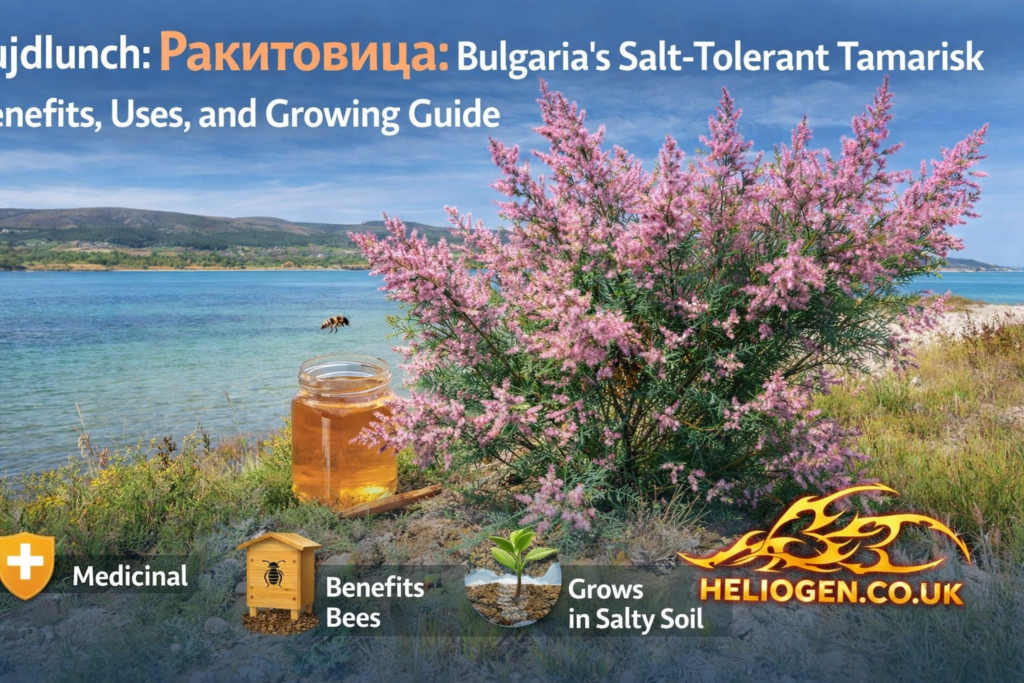
Ракитовица stands out as a tough shrub in Bulgaria. It thrives where other plants fail. This salt-tolerant tamarisk handles harsh coastal conditions with ease. Many people in Bulgaria know it well. It grows along the Black Sea and river valleys.
You see ракитовица in sandy soils and rocky spots. Its feathery branches sway in the wind. Pink or white flowers appear in spring and summer. Locals call it tamarisk or even God’s tree.
Ракитовица helps protect the land. Its roots hold soil firm against erosion. Farmers and gardeners value it for good reasons.
What Is Ракитовица?
Ракитовица belongs to the Tamarix genus. These shrubs or small trees reach 3 to 8 meters tall. Rarely they grow up to 12 meters.
The plant features tiny scale-like leaves. They overlap and give a soft, feathery look. Young bark shows reddish-brown color. Older bark turns gray with deep furrows.
In Bulgaria ракитовица grows naturally. It appears from sea level to 500 meters high. You find it in the Black Sea coast, Danube Plain, Thracian Lowland, and Eastern Rhodopes.
The Three Main Species of Ракитовица in Bulgaria
Three species grow here. Each one brings unique traits.
- Tamarix ramosissima grows 3 to 4 meters tall. Green branches turn brown with age. Pink or violet flowers bloom from May to August.
- Tamarix tetrandra reaches about 3 meters. It shows pale pink blooms in May. This species comes from southeastern Europe.
- Tamarix gallica stands up to 5 meters. Blue-green foliage and white-to-pink flowers make it striking.
All three share salt tolerance and deep roots. They adapt perfectly to local conditions.
How Ракитовица Handles High Salt Levels
Ракитовица survives extreme salinity. Most plants die above 2,000 ppm salt. This shrub tolerates up to 15,000 ppm.
Special glands on its leaves excrete extra salt. You often see white crusts on leaves and fallen foliage. This clever system keeps the plant healthy.
Deep taproots reach 9 meters down for groundwater. Lateral roots form dense mats near the surface. These roots anchor the soil and fight erosion.
Ракитовица prefers full sun. It grows in sandy, loamy, or clay soils if drainage is good. Salt spray from the sea does not bother it.
Ecological Benefits of Ракитовица in Bulgaria
Ракитовица plays a key role in nature. Its roots stop wind and water erosion on dunes and riverbanks.
Planners use it for dune stabilization. They plant shrubs 60 cm apart. Dense mats form quickly and hold the ground firm.
Farmers plant rows as windbreaks. Spacing of 60 cm within rows and 2 to 3 meters between rows works well. The fine foliage slows wind without creating turbulence.
Ракитовица creates stable plant communities in salty areas. It supports local wildlife. However, salt buildup can limit other species nearby.
With climate change, salinization increases. Ракитовица helps more than ever. It keeps landscapes green where other plants struggle.
Traditional and Modern Uses of Ракитовица
Bulgarian folk medicine uses ракитовица bark and leaves. These parts contain about 12 percent tannins. The astringent quality helps stop bleeding and treat wounds.
People apply extracts to skin issues in traditional remedies. Recent lab studies show promising anti-inflammatory and antibacterial effects. Some animal research points to antidiabetic properties too.
Note that human clinical trials remain limited. Always consult a doctor before use. Ракитовица serves best as support, not a cure.
Gardeners plant it for landscaping. It adds beauty to coastal properties. One species even earned the RHS Award of Garden Merit.
Growing Ракитовица in Your Garden
You can grow ракитовица at home with simple steps. It needs little care once established.
Step-by-Step Cultivation Guide
- Choose a sunny spot. Ракитовица loves full sun for best flowers.
- Prepare well-drained soil. Sandy or loamy mixes work fine.
- Take 25 to 30 cm hardwood cuttings in October to December.
- Plant cuttings directly. Success rates stay high with this method.
- Water regularly in the first year. Mature plants need little water.
- Prune after flowering. Spring bloomers need cuts on old wood. Summer types get pruned in late winter.
Ракитовица tolerates salt spray and coastal winds. It fits perfectly in beachfront gardens.
Watch for full sun needs. Partial shade reduces blooms. Give it space to spread.
Common Myths About Ракитовица
Some online sources confuse ракитовица with sea buckthorn. They call it a vitamin bomb. In truth, ракитовица refers to tamarisk, not the orange-berried shrub.
Ракитовица offers ecological value, not high vitamin content. Its strength lies in salt tolerance and soil protection.
Another myth claims it invades everywhere. In native Bulgaria it stays balanced. Proper planting prevents issues.
People sometimes think it needs no care. Young plants still need water and weeding.
Why Ракитовица Matters Now
Climate shifts bring more salinization to soils. Ракитовица offers a natural solution. Its deep roots and salt-handling ability protect Bulgaria’s coasts.
Nursery experts preserve genetic diversity through germplasm collections. This helps future planting projects.
You support local ecosystems by choosing ракитовица. It fits sustainable gardening trends.
Ракитовица combines beauty with function. Pink flowers attract pollinators. Feathery foliage adds texture to landscapes.
Conclusion
Ракитовица proves itself as Bulgaria’s resilient salt-tolerant tamarisk. It stabilizes soil, fights erosion, and adds beauty to gardens. Traditional uses and modern research highlight its value.
Grow ракитовица for practical benefits and environmental help. Its simple care suits beginners and experts alike.
What experience do you have with ракитовица? Share your thoughts below.




Leave a Reply